Trying to decide between Kalorama and Georgetown for your next D.C. home? You are not alone. Both neighborhoods offer top-tier architecture, access to culture, and strong long-term appeal, but the day-to-day experience feels very different. In this guide, you will learn how each area lives, what typical homes cost, and the tradeoffs around commute, privacy, and renovation rules so you can choose with confidence. Let’s dive in.
Quick take: how they differ
- If you want privacy, stately homes, and leafy streets, focus on Kalorama, especially Sheridan‑Kalorama.
- If you want shops, dining, and the waterfront at your doorstep, Georgetown delivers a vibrant, walkable scene.
- Pricing varies by product type. Kalorama Triangle offers many prewar condos at lower entry points, while Sheridan‑Kalorama and core Georgetown command premium figures for renovated townhouses and estates.
Neighborhood feel and geography
Kalorama at a glance
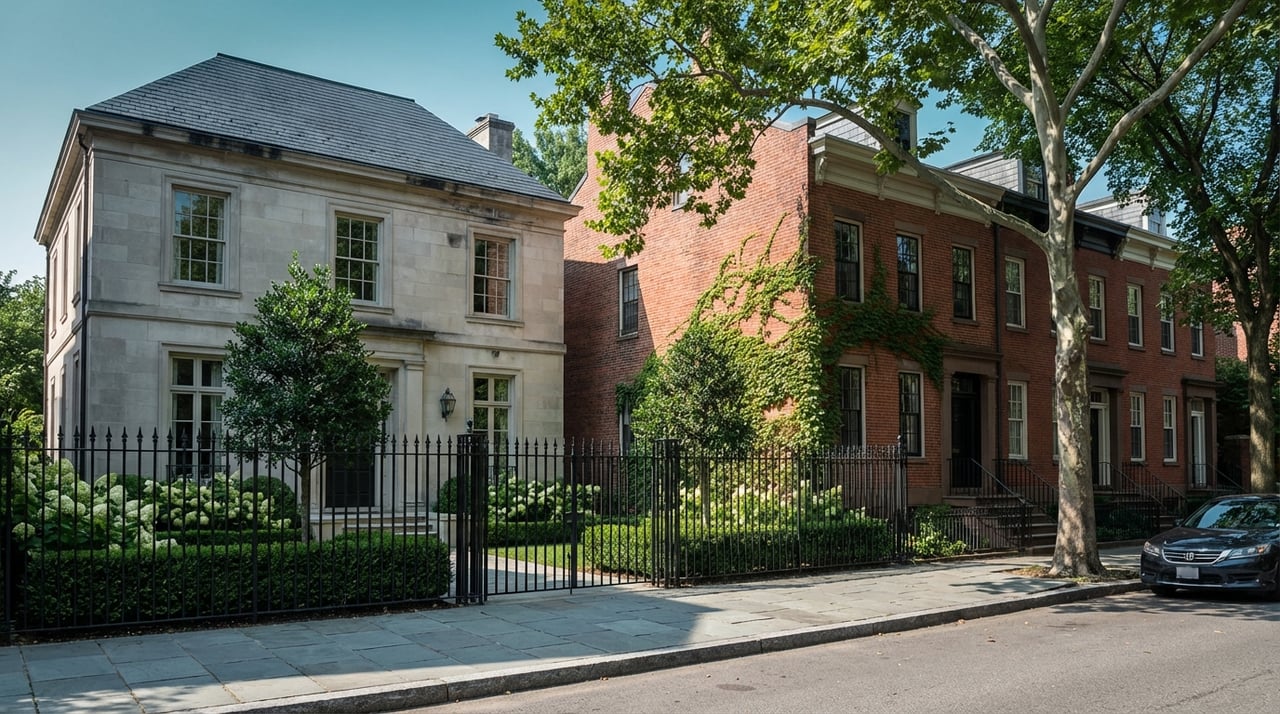
Kalorama actually includes two distinct areas separated by Connecticut Avenue. Sheridan‑Kalorama, sometimes called Kalorama Heights, is known for embassy residences and mansion‑scale homes near Embassy Row’s Massachusetts Avenue corridor. The architecture is grand, with Beaux‑Arts and Georgian façades and a quiet residential feel supported by a diplomatic presence. You will see small parks like Sheridan Circle and Kalorama Park, and you can walk to Dupont or Woodley Park for more activity. For historic context, explore the Sheridan‑Kalorama Historic District and the Embassy Row overview.
Just east of Connecticut Avenue, the Kalorama Triangle Historic District features early‑20th‑century apartment buildings, boutique condos, and smaller townhouses. It sits near Dupont Circle and Adams Morgan, which gives you quicker access to cafes and nightlife than the Sheridan side.
Georgetown at a glance
Georgetown is one of D.C.’s most iconic historic districts, shaped by the C&O Canal corridor, the M Street and Wisconsin Avenue retail spine, and the Potomac waterfront parkland. It is dense, walkable, and lively, with shops and restaurants drawing steady foot traffic throughout the week. You will see concentrated 18th–19th century brick rowhouses and townhouses, along with newer luxury condominium projects along the waterfront. For practical tips on getting around and parking, the neighborhood BID’s Getting Here guide is a helpful reference.
Housing styles and price points
What you will tour
- Kalorama, Sheridan‑Kalorama: Large detached mansions and embassy properties, plus a few landmark conversions. Turnover is limited, and many homes sit on larger lots by D.C. standards.
- Kalorama Triangle: Prewar walk‑ups, boutique condos, and smaller townhouses that offer a different entry point into Kalorama’s location and charm.
- Georgetown: Historic brick rowhouses and townhouses, plus high‑end condo offerings, especially near the waterfront. Recent projects tied to the Four Seasons have set regional per‑square‑foot records, with premium units reported at more than $2,500 to $3,000 per square foot in 2025, as covered by Axios.
Pricing signals to know
Neighborhood medians shift with small sample sizes, so treat these as directional and verify with current sold comps:
- Georgetown: Recent neighborhood snapshots report a median sale price around the low‑to‑mid seven figures, with one provider citing about $1.8 million in 2025. Price per square foot often trends high for renovated properties in prime locations.
- Sheridan‑Kalorama: Reported median list prices often land in the multi‑million range, reflecting the mansion‑scale inventory and embassy residences.
- Kalorama Triangle: Condo and co‑op medians often appear in the low‑to‑mid six‑figure range, which is a very different entry point from Sheridan‑Kalorama.
Because each subarea and product type is distinct, you will get better guidance by pairing your budget with specific home types and blocks. We recommend reviewing 6 to 12 months of local sold comps for a precise read on value.
Walkability, privacy, and daily life
Walkability and everyday errands
Georgetown is among the city’s most walkable commercial neighborhoods, with many daily needs and evening options within a short stroll. You can review block‑level variations using Walk Score’s Georgetown page. Kalorama varies by block and subarea. The Triangle, near Dupont and Adams Morgan, offers stronger walkability for cafes and errands. Sheridan‑Kalorama is quieter and more residential, which many buyers prefer for its calm streets and parks.
Privacy, security, and tourism
Kalorama’s diplomatic presence often means enhanced security at times and a low‑key residential character that suits buyers who prioritize privacy, according to local guides like DC Living’s overview of Kalorama. Georgetown’s core streets and waterfront attract steady visitors and weekend crowds. If you value energy and convenience right outside your door, that activity is a plus. If you prefer a more secluded, low‑profile setting, Kalorama tends to fit better.
Getting around: Metro, bus, parking, and bikes
Rail and bus access
Most Kalorama addresses are within walking distance of Red Line stations at Dupont Circle or Woodley Park, which simplifies rail commutes. You can confirm stations and service via WMATA’s station guide. Georgetown has no Metrorail station within the neighborhood. Travel typically relies on Metrobus routes, rideshare, biking, or short trips to Foggy Bottom or Rosslyn for rail access. The DC Circulator service that linked Georgetown to other nodes was reduced and later ended in 2024, which shifted more riders to WMATA routes and ride‑hail options. For current travel and parking tips, check the BID’s Getting Here page.
Driving and parking
Street parking is tight in both neighborhoods, and Residential Permit Parking rules are enforced, especially in Georgetown’s residential blocks. Expect visitor garages near M Street. You can review permit details through the District’s Residential Parking Permit program.
Bikes and micromobility
Both neighborhoods are bikeable for short trips. Kalorama benefits from nearby bike lanes and fast Red Line access for mixed‑mode commutes. Georgetown’s waterfront and the C&O Canal towpath offer scenic biking and recreation. Capital Bikeshare has strong coverage across the urban core, as outlined in the Capital Bikeshare overview.
Ownership and renovation: rules and costs
Historic districts and approvals
Renovation plans often require historic review in both neighborhoods. Before you budget, verify whether a property sits in a historic district and what that means for exterior changes. The District’s mapping resource is a great first stop: DC Historic District Map and metadata. Build review time into your schedule if you are planning a significant project.
Taxes and carrying costs above $2.5M
DC property taxes include classification and marginal-rate rules that changed recently. If you are evaluating properties above $2.5 million, ask your agent and tax advisor to run estimates using the latest guidance from the Office of Tax and Revenue. You can review current updates in the OTR brief on 2024–2025 changes.
Which neighborhood fits your priorities
- Choose Kalorama if you value privacy, leafy streets, and a calm residential setting with easy access to Dupont and the Red Line. Sheridan‑Kalorama suits buyers seeking embassy‑scale homes. The Triangle suits buyers targeting boutique prewar condos and smaller townhouses.
- Choose Georgetown if you want a walk‑to‑everything lifestyle near the waterfront, a rich dining and shopping scene, and a classic rowhouse streetscape. Expect more visitors and weekend energy, especially near M Street and Wisconsin Avenue.
Quick buyer checklist for tours
- Confirm the exact sub‑neighborhood: Sheridan‑Kalorama, Kalorama Triangle, or Georgetown proper.
- For each property, request recent sold comps from the past 6 to 12 months, HOA or condo budgets, and a list of major capital improvements.
- Visit at least twice, including a weekday commute hour and a weekend evening, to gauge noise, traffic, and walking routes.
- Check Residential Permit Parking rules for the block and whether the property has dedicated parking or a garage. Review the District’s RPP guide.
- If you plan to renovate, confirm historic‑district requirements and the likely review timeline through the DC historic district map.
- For commute checks, confirm walking time to the Red Line in Kalorama or bus and rideshare options from Georgetown. See WMATA stations and the Georgetown BID’s Getting Here resource.
Ready to compare homes on the ground?
If you are weighing Kalorama against Georgetown, a tailored shortlist and block‑level market read will make the choice clear. We combine discreet, principal‑level guidance with fast MLS access and trusted contractor referrals to help you evaluate value, renovation scope, and long‑term fit. When you are ready, schedule your free consultation with Crossman & Co. Real Estate.
FAQs
Is Georgetown more expensive than Kalorama in 2025?
- It depends on product type and block; recent snapshots put Georgetown’s median sale price around the low‑to‑mid seven figures, while Sheridan‑Kalorama often lists in the multi‑millions and the Kalorama Triangle’s condo market trends lower, so verify with current sold comps.
Does Georgetown have a Metrorail station inside the neighborhood?
- No, Georgetown does not have an in‑neighborhood Metrorail station; most residents use bus routes, rideshare, bikes, or nearby stations like Foggy Bottom and Rosslyn for rail, per the BID’s Getting Here guidance and WMATA.
How is parking managed in Georgetown and Kalorama?
- Both neighborhoods have constrained street parking with Residential Permit Parking enforcement; Georgetown also relies on visitor garages near M Street, and you can review permit details through the District’s RPP program.
Are renovations restricted by historic district rules in these areas?
- Many properties sit within historic districts that require review for exterior changes, so confirm district status and timelines using the DC historic district map before you finalize scope and schedule.
What should high‑end buyers know about DC property taxes above $2.5M?
- DC adjusted tax classifications and marginal rates recently, so have your advisor model current carrying costs using the Office of Tax and Revenue’s latest updates in the OTR policy brief.