Wondering what the French Quarter actually feels like once you step beyond the postcard views? If you are considering more time in downtown Charleston, or even thinking about buying nearby, it helps to experience the neighborhood the way locals do: slowly, on foot, and with attention to the details that make this historic district so memorable. This guide walks you through a local-style day in Charleston’s French Quarter, from coffee and church steeples to gallery stops, hidden alleys, and evening plans. Let’s dive in.
Why the French Quarter feels distinct
The French Quarter is compact, historic, and shaped by preservation. In Charleston, the Board of Architectural Review has reviewed new construction, visible alterations, renovations, and many demolitions in historic districts since 1931, which helps explain the area’s cohesive look and preserved streetscape.
That stewardship shows up in the experience of the neighborhood. As you walk, the scale feels consistent, the architecture feels layered, and everyday stops like cafés, galleries, and restaurants sit inside a district with deep roots. For buyers, that combination often creates a stronger sense of place than you find in more conventional neighborhoods.
Start your morning on Church Street
A good French Quarter morning begins with coffee and a pastry. Two easy options are Clerks on Church Street and Le Chambertin just off Broad Street, both convenient places to settle in before a walk through the district.
Clerks is known for house-made pastries, biscuits, coffee, and kombucha. Le Chambertin offers coffee, breakfast pastries, baguettes, imported delicacies, and outdoor patio seating. Either choice sets the tone for a relaxed and walkable start.
Walk the landmark corridor
Once you have coffee in hand, head into the Church Street landmark cluster. St. Philip’s Episcopal Church, the French Huguenot Church, and Dock Street Theatre all sit close together, creating one of the most recognizable historic streetscapes in Charleston.
The French Huguenot Church at 136 Church Street was completed in 1845 and is recognized as Charleston’s first Gothic Revival building. Nearby, St. Philip’s Episcopal Church at 146 Church Street remains one of the city’s most photographed landmarks, and the Dock Street Theatre balcony framed by St. Philip’s steeple is often treated as one of Charleston’s iconic views.
Add Rainbow Row if you want a longer stroll
If you want to extend your morning walk, Rainbow Row is a short addition. It includes thirteen frequently photographed homes along East Bay Street, stretching from 79 to 107 East Bay Street.
This is a simple way to see how the French Quarter connects to the broader historic peninsula. In just a short distance, you move from church steeples and theaters to colorful residential facades and waterfront-adjacent streets.
Spend the afternoon with art and alleys
One of the French Quarter’s biggest strengths is how naturally art fits into the neighborhood. The district is known for a thriving arts scene, and the mix of galleries, historic buildings, and walkable streets makes an afternoon here feel easy rather than overplanned.
If you are exploring with real estate in mind, this matters too. A neighborhood that invites wandering often gives you a better sense of daily life than one you only experience from a car.
Visit a few galleries
For a gallery-focused walk, consider stops like Meyer Vogl Gallery, Revealed Art Gallery, and Helena Fox Fine Art on Church Street. These spots help define the French Quarter as more than a historic district. It is also an active cultural area where contemporary use sits comfortably inside older buildings.
That layered character is part of the appeal for many buyers. You are not just seeing preserved architecture. You are seeing a neighborhood where art, retail, dining, and daily routines still unfold within the historic fabric.
Explore the hidden alleyways
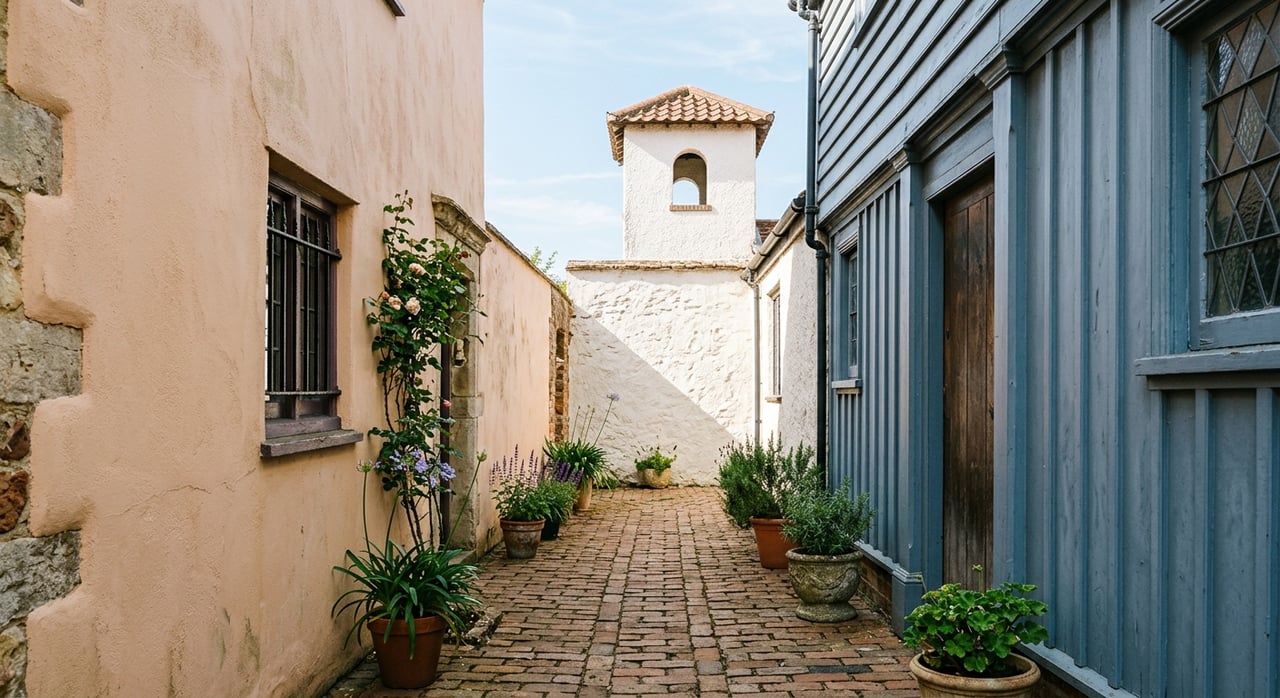
To make the afternoon feel more local, step off the main streets and use the alleys. Stoll’s Alley, Longitude Lane, Bedon’s Alley, Philadelphia Alley, St. Michael’s Alley, Price’s Alley, Unity Alley, and Horlbeck Alley all add a quieter side of the neighborhood.
Stoll’s Alley, Bedon’s Alley, and Longitude Lane are especially noted for centuries-old homes, wrought-iron gates, and shaded passageways. These tucked-away routes slow you down and reveal details that are easy to miss if you stay on the most traveled blocks.
Don’t skip Lodge Alley
Lodge Alley adds some of the district’s deepest historical texture. According to the National Register nomination, the area once included warehouses and dwellings associated with French Huguenots, with merchants using warehouses tied to ships at East Bay Street.
Over time, the alley and its surroundings included taverns, stores, warehouses, carriage houses, stables, and corner dwellings. Today, the references to brick warehouses, Belgian-block paving, and a former seaport character help connect the present-day neighborhood to its earlier working waterfront role.
Plan an evening that stays walkable
By evening, the French Quarter still works best on foot. That is part of the charm. You can move from dinner to a rooftop view or a theater performance without breaking the rhythm of the day.
This kind of walkability is one reason the neighborhood stands out for people seeking a pied-à-terre, second home, or historic downtown base. The district’s appeal is not just visual. It is practical in a way that supports real daily use.
Choose your dinner style
For a classic dinner in the French Quarter, 82 Queen is a well-known option located in three historic buildings with six dining rooms and a courtyard. If you want something more relaxed, Frannie and The Fox at 181 Church Street offers a wood-fired setting with Italian sensibilities.
Both choices reflect the district’s layered use of historic buildings. In the French Quarter, architecture is not just something you admire from the sidewalk. It often shapes where you dine, gather, and spend time.
End with a rooftop or performance
If you want a final view, The Vendue offers a rooftop bar in a property spread across seven warehouse buildings dating to the 1780s. Its art-hotel identity fits naturally with the creative energy of the neighborhood.
If you prefer a performance, Dock Street Theatre keeps the evening close to home base. Charleston Stage Company is in residence there, making it easy to pair dinner with a show while staying within the same walkable pocket of downtown.
What this lifestyle suggests for buyers
The French Quarter lifestyle is shaped by preservation, proximity, and character. A day here can include coffee, landmarks, galleries, alleyways, dinner, and theater, all within a small radius. That pattern tells you a lot about what nearby ownership may feel like.
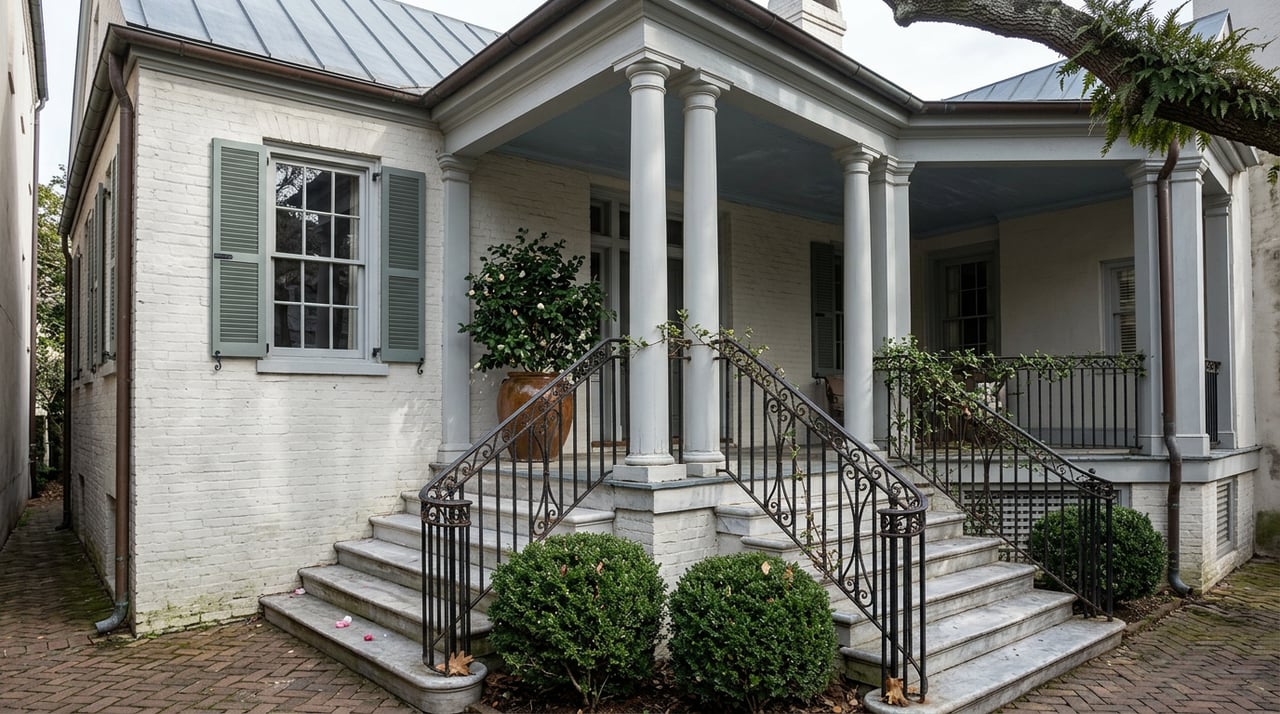
City preservation materials describe the classic Charleston single house, including south-facing piazzas that help reduce solar load and channel breezes. Downtown also shows a strong pattern of adaptive reuse, with examples like The Vendue in former warehouse buildings and Circa 1886 operating in the original carriage house of Wentworth Mansion.
Expect stewardship, not total freedom
For buyers, the most practical takeaway is stewardship. Because the Board of Architectural Review reviews new construction, visible alterations, and many demolitions in historic districts, owning in or near the French Quarter often means working within the city’s preservation rules.
For some buyers, that is a major advantage. It supports the character, scale, and streetscape that make the area so appealing. It also means any future plans for visible exterior changes should be considered with that review framework in mind.
Think character and walkability
Based on the documented building stock and preservation framework, nearby residential opportunities are more likely to include historic single houses and adapted historic buildings than large-lot suburban-style homes. That does not mean every property fits one mold, but it does help set expectations for what makes this area unique.
If you are drawn to the French Quarter, you are likely responding to a specific lifestyle. You may want architecture with story, a neighborhood you can experience on foot, and a downtown setting where daily rituals feel connected to the city’s historic fabric.
Why the French Quarter stays memorable
Some neighborhoods impress you quickly but feel harder to imagine living in. The French Quarter tends to do both at once. You can enjoy it as a visitor, but you can also picture how a normal Tuesday might look, from morning coffee to an evening walk past familiar landmarks.
That is often the difference between a beautiful district and a livable one. In the French Quarter, the historic setting is not separate from daily life. It is the backdrop for it.
If you are exploring Charleston neighborhoods with an eye toward a future purchase, especially a historic home, downtown retreat, or second home with real character, local context matters. When you are ready for thoughtful, owner-led guidance, connect with Crossman & Co. Real Estate to start the conversation.
FAQs
What makes Charleston’s French Quarter different from other downtown areas?
- The French Quarter stands out for its compact historic setting, preservation-focused streetscape, landmark cluster on Church Street, active gallery presence, and walkable mix of dining, culture, and architecture.
What can you do during a day in Charleston’s French Quarter?
- You can start with coffee and pastries, walk Church Street landmarks like St. Philip’s and the French Huguenot Church, browse galleries, explore alleys such as Stoll’s Alley and Lodge Alley, then finish with dinner, a rooftop stop, or a performance at Dock Street Theatre.
What is Lodge Alley known for in Charleston’s French Quarter?
- Lodge Alley is known for its historic seaport character, including references to warehouses, dwellings, taverns, stores, carriage houses, stables, brick warehouse buildings, and Belgian-block paving.
What should buyers know about owning near Charleston’s French Quarter?
- Buyers should understand that ownership in or near the French Quarter is closely tied to preservation, since the City of Charleston’s Board of Architectural Review oversees new construction, visible alterations, renovations, and many demolitions in historic districts.
What types of homes are common near Charleston’s French Quarter?
- Nearby housing is often associated with historic Charleston single houses and adapted historic buildings, reflecting the area’s preservation framework and long-standing building patterns.