If you are trying to buy in Kalorama without spending every day watching listings, the market can feel hard to read. One address may trade like a competitive luxury house market, while another behaves more like a slower-moving condo market. The good news is that once you break Kalorama into its true submarkets, the picture gets much clearer. Let’s dive in.
Kalorama Is Really Two Markets
A smart Kalorama search starts with one key fact: this is not a single, uniform neighborhood market. The DC Office of Planning notes that the city does not have official neighborhood boundaries, and historic-preservation materials separate the area into Sheridan-Kalorama and Kalorama Triangle.
That distinction matters if you are short on time and want to focus your search. Kalorama Triangle is generally the more urban, rowhouse- and apartment-heavy section, while Sheridan-Kalorama is known for larger lots and more free-standing houses. In practical terms, that means your budget, competition, and negotiating room can look very different depending on which part of Kalorama you are targeting.
Kalorama Pricing at a Glance
As of April 30, 2026, Zillow reported Kalorama’s typical home value at $1,373,334, up 2.1% year over year. At the same time, there were only 14 homes for sale and 5 new listings, which points to a notably tight supply picture.
For comparison, Zillow showed Washington, DC overall at an average home value of $580,173, down 3.0% over the past year, with 2,773 active listings and homes going pending in about 26 days. That gap helps explain why Kalorama often feels like its own micro-market rather than a simple extension of broader DC trends.
The wider metro backdrop also improved in April 2026. Bright MLS reported that across the D.C. metro, new pending sales rose 9.3% year over year, new listings rose 7.1%, and the median sold price reached $661,000. Even so, Kalorama remains a niche luxury market where low visible inventory can shape outcomes more than regional averages do.
What Busy Buyers Should Know First
If you want a quick read on Kalorama, here is the simplest takeaway: the property type matters just as much as the location. Condos, co-ops, rowhouses, and detached homes are not moving in lockstep.
That is why a rushed search can lead to the wrong conclusion. You might see more listings and assume buyers have leverage everywhere, when in reality that may be true for some condos but not for a well-positioned house in Sheridan-Kalorama.
Kalorama Triangle Trends
Kalorama Triangle offers the most mixed inventory profile. Realtor.com’s neighborhood summary showed 30 homes for sale, a median listing price of $760,000, a median sold price of $646,750, 46 days on market, and a 99% sale-to-list ratio in March and April 2026.
The year-over-year changes were especially telling. Active listings rose 23.53%, median listing price rose 52.61%, and days on market rose 64.29%, while price per square foot fell 3.52%. For buyers, that combination suggests more visible supply and more variation in what is being listed, especially between smaller condos and larger, higher-end attached homes.
Historic-preservation materials also note that rowhouses became the most common building form in Kalorama Triangle. That helps explain why this submarket can offer a broader range of price points and property styles than many people expect when they first start looking in Kalorama.
Sheridan-Kalorama Trends
Sheridan-Kalorama sits at the more exclusive end of the local pricing ladder. Redfin reported a median sale price of $1.66 million for the three months ending April 2026, down 7.5% year over year, with homes averaging 23 days on market and 10 homes sold in April.
Those numbers suggest a market that is still moving with relative speed when the right property comes up. Even with some pricing adjustment from the prior year, the shorter time on market points to continued demand for scarce, well-located homes in this part of Kalorama.
For a busy buyer, this often means one thing: if you are focused on larger houses or rarer residential offerings, you may have less time to deliberate than you would in the condo segment. Preparation matters more when selection is limited.
Condo Trends in Kalorama
Condos are the most inventory-rich and price-sensitive slice of the Kalorama Triangle market. Redfin’s condo search page showed 426 condo homes in Kalorama Triangle, with active listings ranging from the low $300,000s to more than $1 million.
Recent sold examples also show how broad this segment can be. Sales included 2205 California St NW #303 at $1.175 million in 46 days, 1741 Johnson Ave NW #301 at $985,000 in 93 days, and 1825 T St NW #207 at $445,000 in 50 days.
This fits with the broader DC condo backdrop. Homes.com reported that Washington, DC condo inventory in April 2026 rose 31.7% year over year while condo prices were flat. For you as a buyer, that usually means condos are the part of Kalorama where negotiation may be most realistic, especially when a listing has been sitting or competes with several similar units.
Co-op Trends in Kalorama
Co-ops remain an important part of Kalorama’s housing mix, especially in older, established buildings. They can offer space, architectural character, and prestige, but they also require a more careful review of monthly costs and building policies.
A Redfin example at 2120 Kalorama Rd NW #1 showed a full-floor three-bedroom co-op in a four-unit building with a $3,416 monthly fee that included property taxes. Nearby early-2026 sales on the same page ranged from $499,000 at 2145 California St NW #303 to $2.999 million at 2029 Connecticut Ave NW #54.
The lesson is simple: co-op pricing alone never tells the whole story. Carrying costs can materially affect affordability, so if you are comparing a co-op to a condo or rowhouse, you need to look at the total monthly picture rather than the asking price by itself.
Rowhouses and Detached Homes
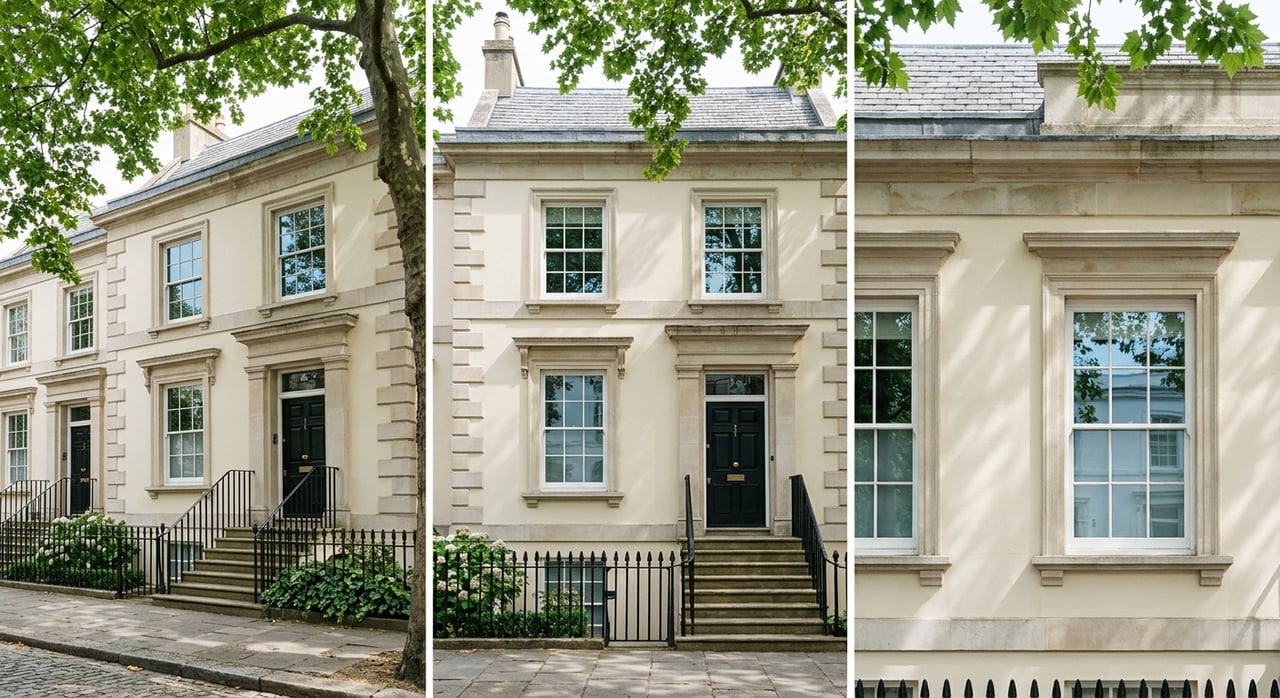
When buyers picture classic Kalorama living, they are often thinking of rowhouses or larger detached homes. Historic-preservation sources describe rowhouses as the most common building form in Kalorama Triangle, while Sheridan-Kalorama is more associated with larger lots and free-standing houses.
Recent attached-house sales in Kalorama Triangle show that strong homes can still attract quick action. Examples included 1706 16th St NW #1 at $950,000, selling 6% over list after 35 days; 2320 Ashmead Pl NW at $1.299 million, selling 18% over list after 42 days; and 1436 S St NW at $2.465 million after 21 days.
That pattern matters if you want a home with scale, condition, and a distinctive setting. Even when some neighborhood-level metrics look softer, standout houses can still draw serious attention and move quickly.
How Kalorama Compares Nearby
Kalorama sits in a premium position within Washington, DC, though it is not the city’s highest-priced enclave. Zillow neighborhood values listed on its Washington, DC page showed Kalorama at $1.373 million, compared with Georgetown at $1.513 million, Woodley Park at $844,301, West End at $648,763, Dupont Circle at $448,502, Observatory Circle at $2.216 million, and Woodland-Normanstone Terrace at $3.35 million.
What stands out is not just price, but supply. A separate Zillow snippet showed 62 homes for sale in Georgetown versus 14 in Kalorama, suggesting Georgetown may offer more selection while Kalorama remains far tighter on visible inventory.
For you, that means Kalorama can be a good fit if you value a smaller, more constrained luxury inventory pool and are prepared to act when the right match appears. If you prefer broader choice, nearby neighborhoods may offer more options at any given moment.
A Practical Strategy for Busy Buyers
If your schedule is packed, your Kalorama search needs structure. The fastest way to save time is to narrow the search by submarket and property type before you start reacting to individual listings.
A practical framework looks like this:
- Focus on Kalorama Triangle if you want more condos, attached homes, and a wider pricing spread
- Focus on Sheridan-Kalorama if you want larger homes and can move quickly when inventory appears
- Review co-op fees carefully before comparing them to condos or houses
- Expect the most negotiating room in condo-style inventory
- Expect faster decisions for scarce houses and distinctive luxury properties
This kind of filtered approach helps you avoid wasting time on listings that do not match your priorities or your likely negotiating position.
What the Market Means for Your Next Move
Kalorama can reward buyers who read the details rather than the headline number. A neighborhood average may make the area look straightforward, but the real story is the split between condo-rich, more negotiable inventory and scarcer, high-demand homes.
If you are balancing work, family, or a relocation timeline, that distinction can help you make better decisions faster. Instead of treating every Kalorama listing the same way, you can tailor your strategy to the segment you are actually buying in.
When you want a more focused read on Kalorama or other DC luxury neighborhoods, Crossman & Co. Real Estate offers owner-led guidance designed for busy buyers who value local insight, discretion, and responsive service.
FAQs
What makes Kalorama different from other DC luxury neighborhoods?
- Kalorama stands out for its tight inventory, high typical home values, and split between the more urban Kalorama Triangle and the more house-oriented Sheridan-Kalorama.
What should buyers know about Kalorama Triangle real estate?
- Kalorama Triangle tends to have more condos, rowhouses, and mixed inventory, with more visible supply and often more room for negotiation than the house market.
What should buyers know about Sheridan-Kalorama homes?
- Sheridan-Kalorama generally has larger lots, more free-standing houses, higher sale prices, and less available inventory, which can lead to faster decisions when strong listings appear.
How do Kalorama co-ops affect a buyer’s budget?
- Co-ops can carry substantial monthly fees, and those costs can materially change affordability even when the purchase price looks competitive.
Are Kalorama condos easier to negotiate than houses?
- Based on the reported inventory trends, condos are usually the most supply-sensitive and price-sensitive part of the market, which can create more negotiating opportunities than scarce houses do.
How does Kalorama compare with Georgetown for buyers?
- Georgetown shows higher typical values and more available listings, while Kalorama has tighter visible inventory, which can make choice more limited but also keeps the market distinct.